The Center for Civil Liberties Presented a Human Rights European Integration Map: A Roadmap for Reforms on Ukraine’s Path to the EU
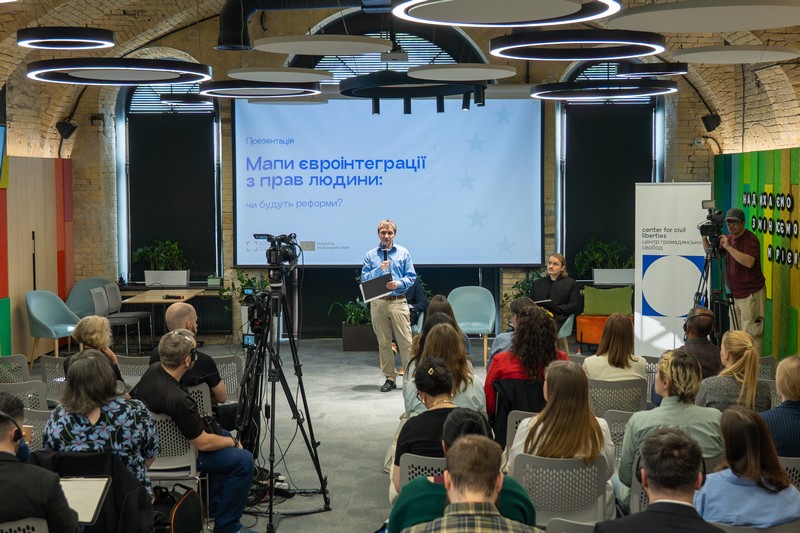

At the beginning of May, the Center for Civil Liberties presented a new analytical online tool — the Human Rights European Integration Map, designed to become an important guide in aligning Ukrainian legislation and practices with the standards of the European Union. The initiative aims to provide a systematic assessment of the state of human rights implementation in Ukraine and identify concrete steps necessary for advancing reforms within the framework of European integration.
The Map covers more than 30 sections grouped into three key categories: “Independent Institutions,” “Fundamental Rights,” and “Specific Human Rights Issues.” This structure enables a comprehensive evaluation of Ukraine’s compliance with European legal and institutional standards, while also identifying existing gaps and practical ways to address them.

The analytical tool provides a holistic overview of reforms already implemented, challenges that remain unresolved, and measures required for Ukraine’s further advancement toward full EU membership. It also outlines possible pathways for reforms and contributes to the development and implementation of the National Human Rights Strategy until 2035.
Each section of the Map consists of an analytical Policy Paper in a specific area of human rights, accompanied by detailed recommendations for adapting Ukrainian legislation to EU legal standards at the level of concrete legal provisions.
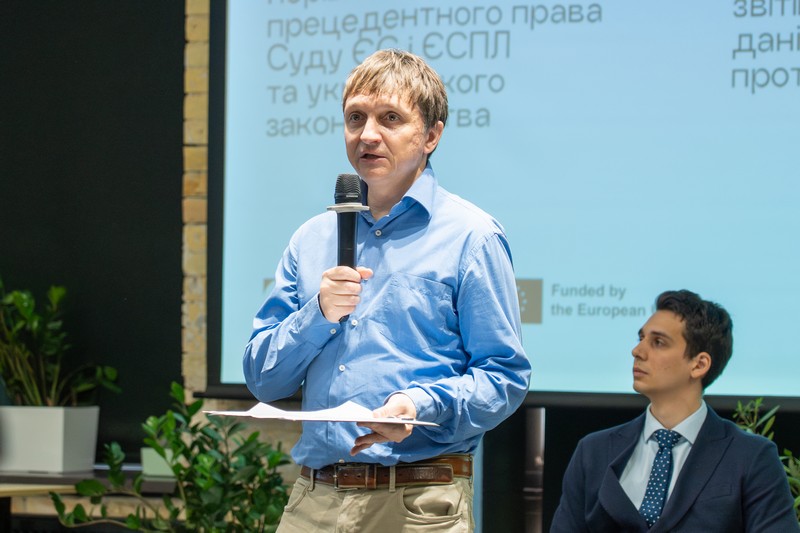
According to Volodymyr Yavorskyi, Program Director of the Center for Civil Liberties, the methodology behind the project combines qualitative analysis of EU law, decisions of the Court of Justice of the European Union and the European Court of Human Rights with quantitative data on actual practices, including court statistics, state authority reports, and ECtHR judgments concerning Ukraine. This approach, he emphasized, ensures an objective assessment not only of legal frameworks but also of their practical implementation.


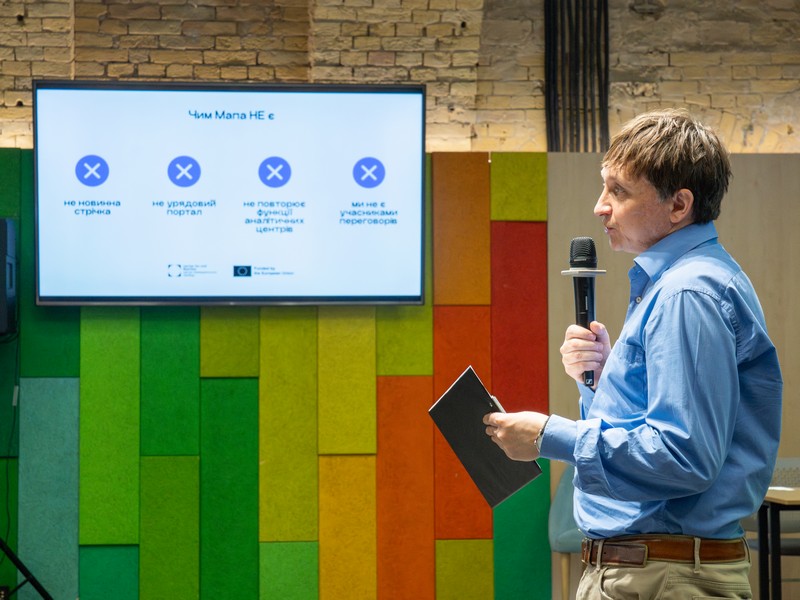
At the same time, the Center underlines that the Map is not a governmental platform or news resource, but rather an independent civil society perspective shaped through a human rights lens.
The organization believes the tool will serve as a practical resource for public authorities, parliamentarians, human rights organizations, and international partners involved in advancing reforms in Ukraine. It may be used for strategic planning, progress monitoring, and evaluating compliance with EU standards.
Head of the Center for Civil Liberties, Oleksandra Matviichuk, emphasized that Ukraine’s accession to the European Union goes far beyond formal procedures or economic reforms. At its core, it is about embracing fundamental values — respect for human dignity, freedom, equality, solidarity, and the rule of law — which define the European community.


The Center stresses that reforms in the field of human rights are necessary first and foremost for Ukrainian society itself, as they directly shape citizens’ quality of life and the democratic development of the state.
The creation of the Map became possible through the contribution of experts and Ukrainian civil society organizations, including JurFem Analytical Center, the Ukrainian Helsinki Human Rights Union, FREERIGHTS, OPORA, Right to Protection, the Digital Security Lab, and the Social Action Centre.
Скануйте qr-код для доступу до
Мапи євроінтеграції з прав людини

Oleksandr Kondratenko
Based on materials provided by the Press Service of the Center for Civil Liberties