Joint Work on the U.S. Proposal Outlining Steps Toward Peace, a Historic Visit to France and Agreements on the Purchase of Aircraft and Air Defense Systems, Strengthening Ukraine’s Resilience – Results of the President’s Diplomatic Work in November
In November, President of Ukraine Volodymyr Zelenskyy held more than 20 meetings with leaders of states and international organizations, government representatives, and partner teams, as well as nearly 35 phone conversations. The Head of State addressed the Parliamentary Summit of the Crimea Platform online, held a video conference with representatives of Ukrainian diplomatic missions, and participated in an online meeting of the Coalition of the Willing and an online discussion with U.S. senators.
Among the key diplomatic priorities were: achieving a dignified peace, defense assistance, strengthening Ukraine’s air fleet and air defense capabilities, and increasing pressure on Russia.
“It is important that the dialogue is constructive, and that all issues at the meetings were discussed openly and in a way that ensures Ukraine’s sovereignty and national interests. I am grateful to America, to President Trump’s team, and to the President personally for the time invested so intensively in defining the steps to end the war. We will continue working. I look forward to a full report from our team during an in-person meeting,” Volodymyr Zelenskyy noted.
Another priority for the President was securing additional contributions and countries for the PURL initiative and advancing the SAFE instrument. In November, the total declared funding within the PURL initiative – now joined by 18 nations – reached 3.12 billion dollars. Also last month, European Union member states completed the submission of detailed national investment plans within the SAFE financial instrument. Nineteen EU countries declared readiness to take out loans, and 13 expressed interest in involving Ukraine in joint defense procurement projects – including financing the supply of drones, artillery ammunition, and missile systems.
The President’s diplomatic efforts were also focused on increasing financing for drone production and expanding joint defense manufacturing, strengthening sanctions pressure on Russia, and using frozen Russian assets to defend and rebuild Ukraine.
A special priority remained the negotiation process on Ukraine’s EU membership. In November, the European Commission presented its report under the 2025 EU Enlargement Package. The document states that Ukraine continues to make steady progress in aligning its legislation with EU acquis and that there is readiness to open negotiating clusters.
“This is the best assessment result so far – proof that even in the midst of defending against Russia’s full-scale aggression, Ukraine continues its reforms and advances in line with European standards. We expect decisive action from the European Union to overcome all artificial barriers on the path toward a strong and united Europe,” the Head of State emphasized.
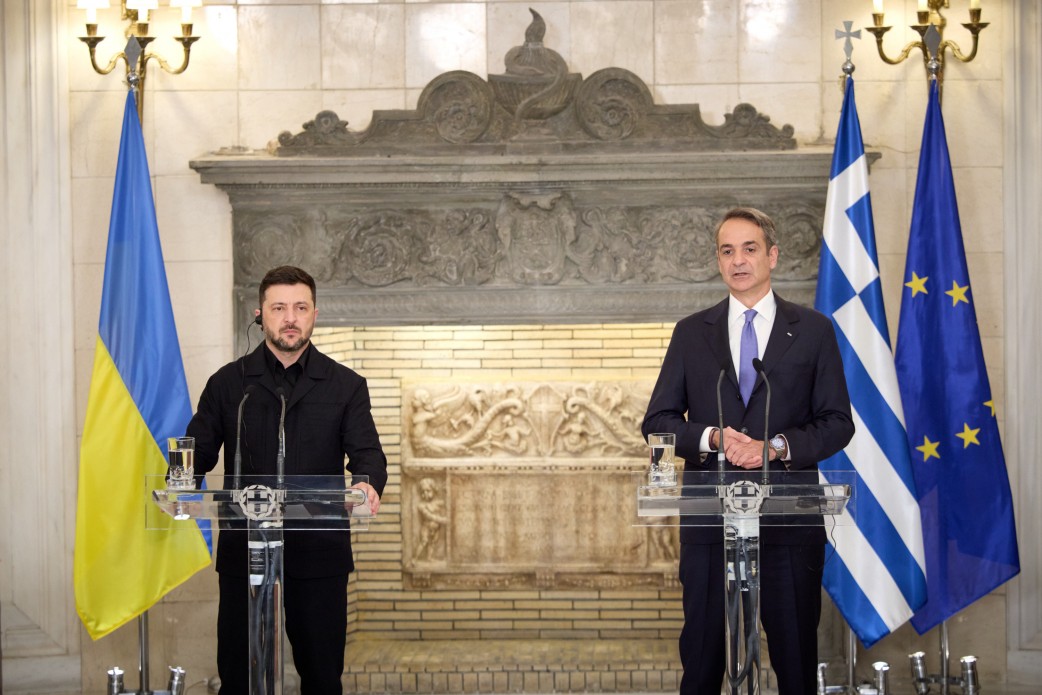
In Athens, the main focus was securing gas supplies to Ukraine. During the November 16 visit, Volodymyr Zelenskyy and Prime Minister of Greece Kyriakos Mitsotakis discussed arrangements on the supply of natural gas. Naftogaz of Ukraine and the Greek state company DEPA Commercial signed a document on supplying gas to Ukraine this winter.
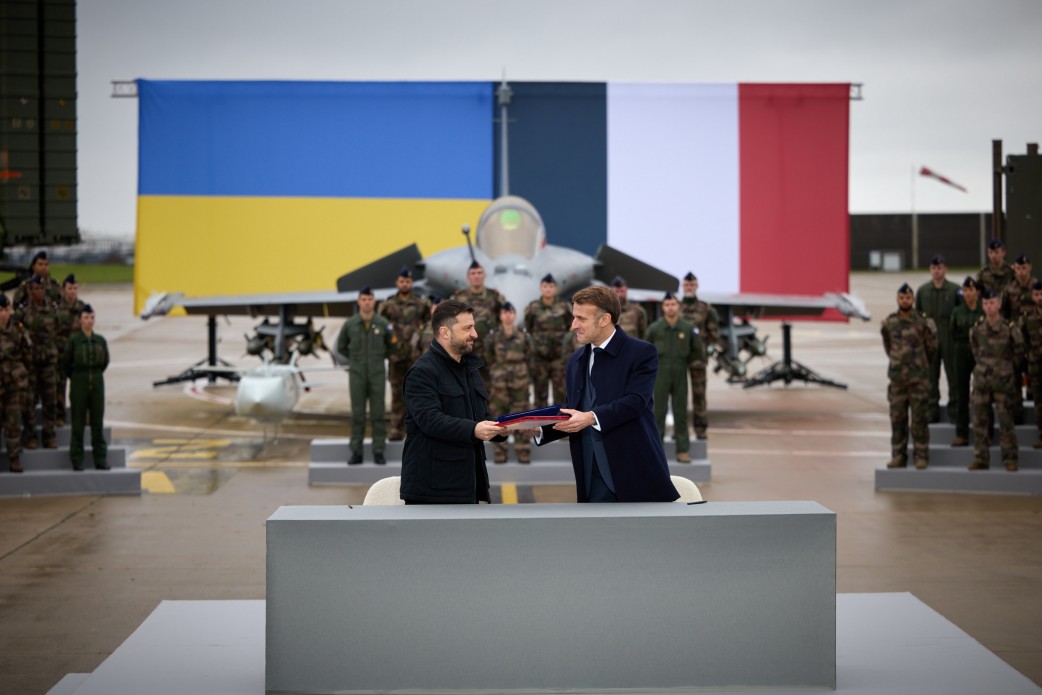
In Paris on November 17, the President of Ukraine and the President of France signed a declaration of intent on cooperation: the document will allow Ukraine to acquire 100 Rafale F4 aircraft by 2035, SAMP/T air defense systems, air defense radars, air-to-air missiles, and guided aerial bombs. It also provides for the transfer of technologies and joint aircraft production with localization in Ukraine.
During Volodymyr Zelenskyy’s visit to Madrid on November 18, Prime Minister of Spain Pedro Sánchez announced a 100 million-euro contribution to the PURL initiative, an economic package of 200 million euros – including for energy restoration and strengthening – and 215 million euros for joint weapons production projects with Ukraine under SAFE. Ukraine will also work with Spanish defense manufacturers on a project to supply, in particular, long-range target detection radars that can significantly reinforce Ukraine’s defense.
On November 19 in Ankara, Volodymyr Zelenskyy discussed with President of Türkiye Recep Tayyip Erdoğan the diplomatic efforts needed to ensure Russia ends its war against Ukraine. They also discussed joint manufacturing projects and Türkiye’s involvement in the Coalition of the Willing, especially in its naval component aimed at guaranteeing security in the Black Sea.
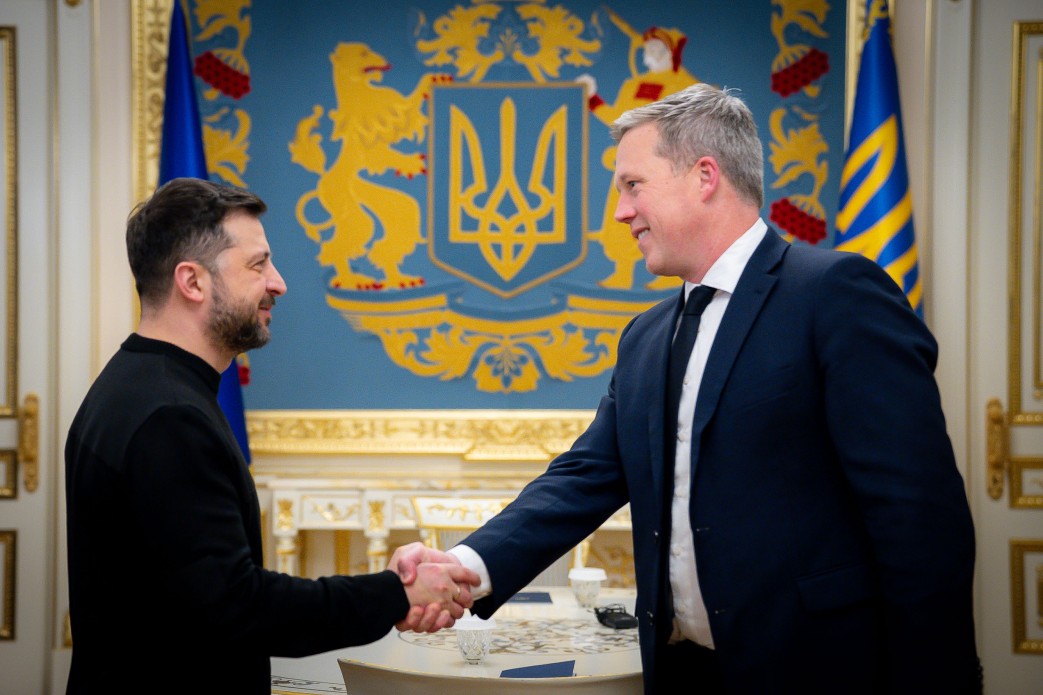
In November, the President also met with partners visiting Ukraine: Speaker of the National Assembly of Serbia Ana Brnabić, Minister of Foreign Affairs of Latvia Baiba Braže, Minister of Defense of Lithuania Robertas Kaunas, and representatives of NATO partner countries.
Last month, the Head of State held a video conference with representatives of Ukraine’s diplomatic missions, during which he outlined the main priorities of their work. Key tasks include strengthening air defense, expanding the PURL initiative, developing the SAFE instrument and joint production, advancing UN resolutions in support of Ukraine – especially regarding Ukrainian children abducted by Russia.
That same month, the President held an online meeting with U.S. senators and participated in the Parliamentary Summit of the Crimea Platform, which brought together nearly 70 foreign delegations. In his address to participants, Volodymyr Zelenskyy called for maintaining pressure on Russia, which seeks legal recognition of stolen territories.
“It is critically important to defend the principles on which Europe is built: that borders cannot be changed by force, that war criminals cannot escape justice, and that an aggressor must fully pay for the war it has started – which is why decisions regarding Russian assets are necessary,” the Head of State emphasized.
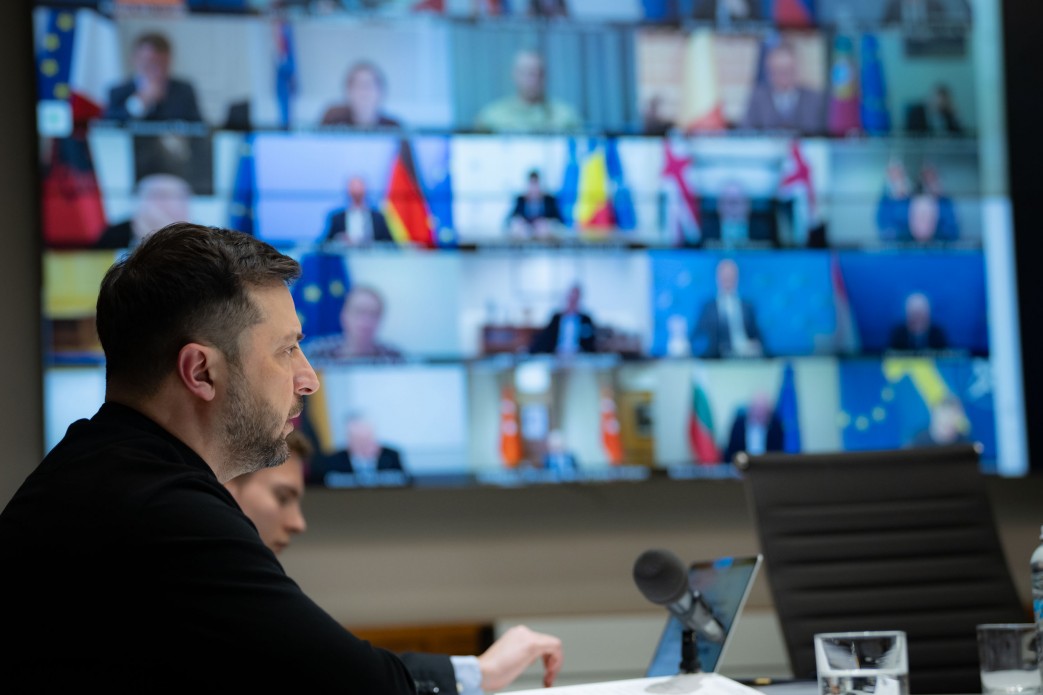
On November 25, a session of the Coalition of the Willing took place via video conference with the participation of representatives from 40 partner countries. For the first time, U.S. Secretary of State Marco Rubio was present. Volodymyr Zelenskyy underscored that as long as Russia shows no genuine intention to end its war of aggression, support for Ukraine cannot be stopped.
In addition, November saw continued efforts to tighten sanctions pressure on Russia and synchronize sanctions with partners. By decrees of the Head of State, eight National Security and Defense Council decisions on sanctions were enacted. Ukraine aligned itself with the European Union’s 19th sanctions package. Its overall impact on limiting Russian revenue is estimated to be at least tens of billions of euros annually. The latest U.S. sanctions also took effect in Ukraine’s jurisdiction, targeting Rosneft, its subsidiaries, and companies belonging to the Lukoil group. Overall, since the beginning of the year, Ukraine has already synchronized 13 sanctions packages with partners: the United Kingdom, Canada, the United States, Japan, and the European Union.
Last month, Ukraine also imposed restrictions on Russian entities involved in resource extraction in the Arctic and companies developing mineral deposits. Sanctions were also applied to 56 maritime vessels that between 2022 and 2025 illegally entered Ukraine’s temporarily occupied ports and exported Ukrainian agricultural products. Russian officials, including financier Kirill Dmitriev – close to the Russian ruler and engaged in spreading propaganda – and Russian publishing houses promoting the justification of aggression and anti-Ukrainian narratives in the temporarily occupied territories of Ukraine were also targeted by Ukrainian sanctions.
In total, the State Register of Sanctions now includes more than 20,000 sanctioned legal entities and individuals.
Our country continues its work to increase pressure on Russia. Together with partners in the European Union, proposals for the 20th sanctions package are being finalized. It is expected to introduce additional restrictions on Russia’s energy sector, the shadow fleet, companies supporting the aggressor’s military-industrial complex, and individuals involved in the abduction of Ukrainian children.
https://www.president.gov.ua/news