In Kyiv, on the occasion of Ukraine’s Independence Day, the first-ever parade of aerial, ground, and naval drones in the country took place, featuring nearly 100 pieces of Ukrainian weaponry. And this is only part of what our country can already be proud of.
President Volodymyr Zelenskyy thanked everyone who helped Ukraine at the beginning of Russia’s full-scale aggression and those who continue to help now. He stressed that the time has come when our country will already be helping others with what makes this war distinctive and enables us to protect people’s lives and our independence – unmanned technologies.
“What, after this war, will enable Ukraine to become a true security provider for its partners, for its friends first and foremost – for our Europe, for everyone who has helped us. Ukraine knows how to be grateful. Ukraine knows how to be strong. But we have something to show. We have reasons to thank the Ukrainians who produce and use our weapons,” the President said.
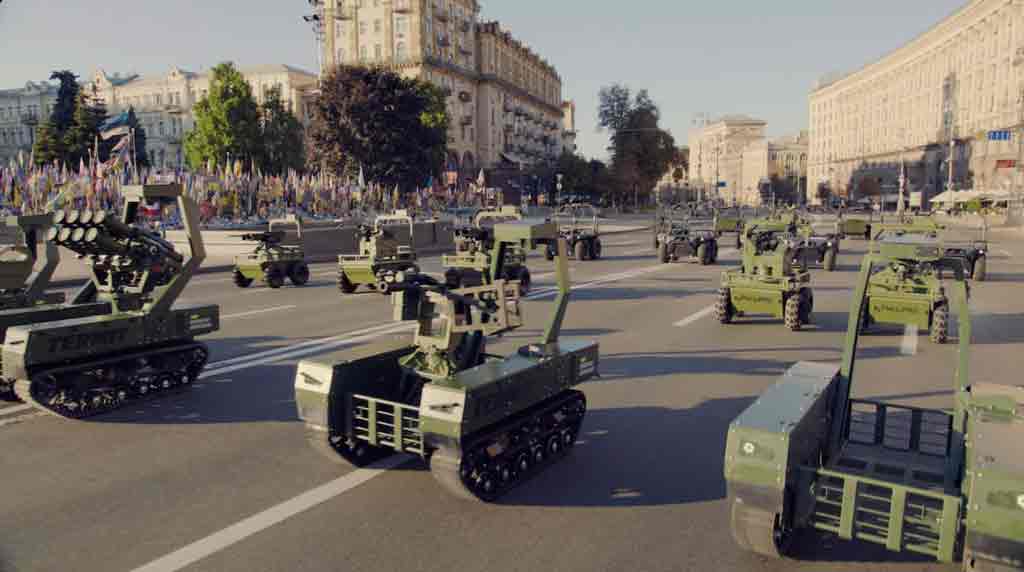
A video showed 30 unmanned ground vehicles (UGVs) traveling along Khreshchatyk. They were created to save the lives of Ukrainian warriors – TerMIT, Rys, Simba, Ardal, Zmiy, and Ratel.
The UGVs conduct reconnaissance, lay and clear mines, deliver ammunition, provisions, and equipment, and evacuate the wounded. They also provide fire support and help assault enemy positions. Unmanned ground vehicles can carry loads weighing up to 600 kilograms and travel dozens of kilometers. This year alone, UGVs have carried out more than 66,000 missions. In 2026, the Defense Forces contracted more than 22,000 domestically produced unmanned ground vehicles.
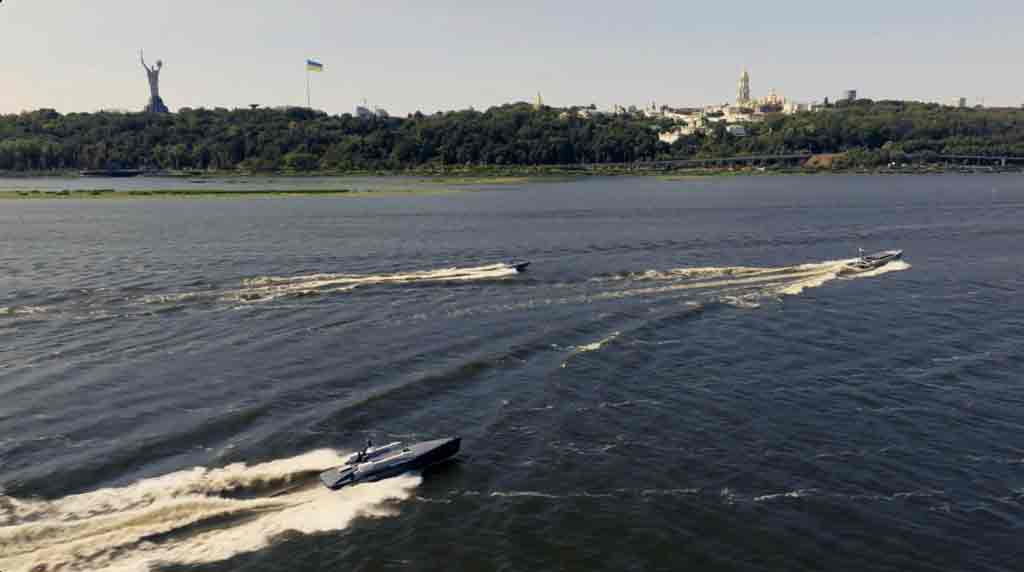
A fleet of nine Ukrainian unmanned surface vehicles traveled along the Dnipro River. They were created during the war and tested in combat conditions. These USVs deprived the enemy of its dominance in the Black Sea and forced a significant part of the Russian fleet to leave temporarily occupied Crimea.
The multipurpose combat platforms Sea Baby, Magura, and Sargan carry out reconnaissance and patrol missions, strike maritime targets, and launch our drones. They have successfully attacked Russian ships and military infrastructure on numerous occasions. Ukraine’s Magura was the first in the world to destroy an aerial target from a naval unmanned platform, striking Russian Su-30 combat aircraft. Sea Baby successfully shelled the occupiers on the Kinburn Spit.
Eighteen Ukrainian aerial-target interceptors – P1-Sun, Litavr, and Sting – flew over the capital. They were designed to counter enemy “shaheds” and other types of drones. They represent a new layer of Ukrainian air defense – mass-produced, technological, and inexpensive.
The aerial fleet also included 27 bomber drones – Vampire, Lasar, and Heavy Shot. They hunt enemy equipment, artillery, and personnel, destroy fortifications and dugouts, and remotely lay mines on roads and positions. And where ground logistics are impossible, they deliver ammunition, water, and equipment. Ukrainian bombers can carry dozens of kilograms of payload and operate at distances of dozens of kilometers.
In addition, eight Ukrainian reconnaissance drones, SHARK and LF-400, took part in the drone parade. They locate equipment, artillery, command posts, and enemy movements dozens of kilometers from the front line and determine target coordinates, helping Ukrainian weapons strike accurately. SHARK can remain in the air for up to seven hours and cover a route of up to 420 kilometers. LF-400 not only conducts surveillance but also carries strike drones, delivering them closer to the area where they will carry out their combat mission. > Александр Кондратенко: The aerial drone parade concluded with seven Ukrainian UGVs, Morok and Sichen, created for long-range sanctions. They embody Ukraine’s deep strikes, traveling hundreds and thousands of kilometers from the front line to hit the targets that fuel Russia’s war machine: military plants, ammunition and fuel depots, logistics hubs, airfields, and other military facilities. Last year alone, these drones carried out nearly 2,000 strikes and hit more than 1,000 confirmed targets on enemy territory.
https://www.president.gov.ua/news/
President Volodymyr Zelenskyy thanked everyone who helped Ukraine at the beginning of Russia’s full-scale aggression and those who continue to help now. He stressed that the time has come when our country will already be helping others with what makes this war distinctive and enables us to protect people’s lives and our independence – unmanned technologies.
“What, after this war, will enable Ukraine to become a true security provider for its partners, for its friends first and foremost – for our Europe, for everyone who has helped us. Ukraine knows how to be grateful. Ukraine knows how to be strong. But we have something to show. We have reasons to thank the Ukrainians who produce and use our weapons,” the President said.
A video showed 30 unmanned ground vehicles (UGVs) traveling along Khreshchatyk. They were created to save the lives of Ukrainian warriors – TerMIT, Rys, Simba, Ardal, Zmiy, and Ratel.
The UGVs conduct reconnaissance, lay and clear mines, deliver ammunition, provisions, and equipment, and evacuate the wounded. They also provide fire support and help assault enemy positions. Unmanned ground vehicles can carry loads weighing up to 600 kilograms and travel dozens of kilometers. This year alone, UGVs have carried out more than 66,000 missions. In 2026, the Defense Forces contracted more than 22,000 domestically produced unmanned ground vehicles.
A fleet of nine Ukrainian unmanned surface vehicles traveled along the Dnipro River. They were created during the war and tested in combat conditions. These USVs deprived the enemy of its dominance in the Black Sea and forced a significant part of the Russian fleet to leave temporarily occupied Crimea.
The multipurpose combat platforms Sea Baby, Magura, and Sargan carry out reconnaissance and patrol missions, strike maritime targets, and launch our drones. They have successfully attacked Russian ships and military infrastructure on numerous occasions. Ukraine’s Magura was the first in the world to destroy an aerial target from a naval unmanned platform, striking Russian Su-30 combat aircraft. Sea Baby successfully shelled the occupiers on the Kinburn Spit.
Eighteen Ukrainian aerial-target interceptors – P1-Sun, Litavr, and Sting – flew over the capital. They were designed to counter enemy “shaheds” and other types of drones. They represent a new layer of Ukrainian air defense – mass-produced, technological, and inexpensive.
The aerial fleet also included 27 bomber drones – Vampire, Lasar, and Heavy Shot. They hunt enemy equipment, artillery, and personnel, destroy fortifications and dugouts, and remotely lay mines on roads and positions. And where ground logistics are impossible, they deliver ammunition, water, and equipment. Ukrainian bombers can carry dozens of kilograms of payload and operate at distances of dozens of kilometers.
In addition, eight Ukrainian reconnaissance drones, SHARK and LF-400, took part in the drone parade. They locate equipment, artillery, command posts, and enemy movements dozens of kilometers from the front line and determine target coordinates, helping Ukrainian weapons strike accurately. SHARK can remain in the air for up to seven hours and cover a route of up to 420 kilometers. LF-400 not only conducts surveillance but also carries strike drones, delivering them closer to the area where they will carry out their combat mission. > Александр Кондратенко: The aerial drone parade concluded with seven Ukrainian UGVs, Morok and Sichen, created for long-range sanctions. They embody Ukraine’s deep strikes, traveling hundreds and thousands of kilometers from the front line to hit the targets that fuel Russia’s war machine: military plants, ammunition and fuel depots, logistics hubs, airfields, and other military facilities. Last year alone, these drones carried out nearly 2,000 strikes and hit more than 1,000 confirmed targets on enemy territory.
https://www.president.gov.ua/news/